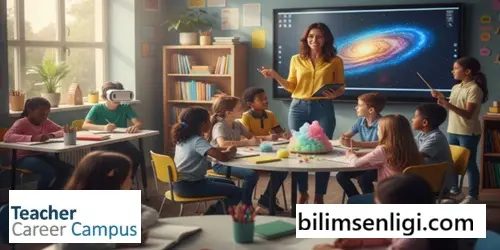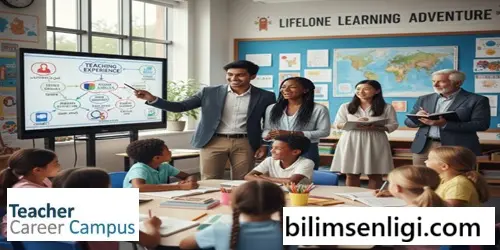
The fields of Science, Technology, Engineering, and Mathematics (STEM) form the foundation of innovation in our era and the future. However, for many students, STEM courses can sometimes seem inaccessible or tedious due to abstract concepts, complex formulas, and challenging problem-solving tasks. This situation can reduce student interest in these critical areas and negatively affect their future career choices.
This is precisely where Gamification in Education comes in. Gamification is the application of game design elements and mechanics to non-game contexts (in this case, course content and the learning process). Its goal is to increase student motivation, engagement, and learning outcomes. By bringing the inherently curiosity-inducing, challenging, and rewarding elements from games into the classroom, we can transform STEM courses from “a task that must be done” into “an exciting adventure to dive into.”
This article presents concrete strategies for educators and teachers on how to use the principles of Gamification to make STEM courses more engaging, interactive, and long-lasting.
I. Core Mechanics of Gamification and STEM Integration
Gamification is not just about using digital tools or calling an exam a “game.” A successful gamification strategy is built upon well-defined game mechanics that target students’ intrinsic motivation.
1. Points, Badges, and Leaderboards (PBL)
These three mechanics are the most well-known and easiest-to-implement elements of gamification.
- Points: Can be viewed as experience points (XP) that students accumulate as they complete small tasks (completing homework, class participation, extra reading) and large tasks (project submission, solving difficult problems). Awarding points for correctly setting up a complex experiment in physics class provides students with immediate feedback.
- Badges: Are digital or physical rewards that represent specific skills or achievements. For example, a student might be awarded an “Algorithm Master” badge when they master three different problem-solving techniques in math class. Badges are a tangible indicator of achievement.
- Leaderboards: Are panels where students are ranked according to their points and badges. Caution: Leaderboards should be designed to honor not only the highest scores but also different areas of achievement (most creative solution, best teamwork, most improved, etc.). Otherwise, they might demotivate lower-scoring students.
STEM Integration: Instead of memorizing the periodic table in chemistry class, different badges can be awarded to students who discover different element groups. In biology class, those who complete a challenging laboratory procedure flawlessly can earn the “Microscope Adventurer” badge.
2. Progress Bars and Levels
Games constantly give players a sense of progression. In education, students should also clearly see where they are in the course and where they are going.
- Levels: Course content can be divided into sequentially unlocked levels. At the end of each level, a “Boss Battle” (a tough project, a comprehensive test) can be placed. Completing a level grants the right to move on to the next, more challenging topic (level).
- Progress Bars: Show how much of a topic or project has been completed. This helps keep student motivation high and concretizes their sense of accomplishment, especially in long-term STEM projects.
STEM Integration: Divide the engineering design process into levels: Level 1: Define the Problem, Level 2: Develop Ideas, Level 3: Build the Prototype, Level 4: Test and Improve.
3. Narrative (Story) and Thematization
STEM topics are often connected to real-world problems and engaging stories. Gamification adds an immersive narrative to these topics, turning the class into an adventure.
- Creating a Scenario: Create a scenario that lasts throughout the school year. For example, designing a power source for a colony to be sent into space or developing a biological solution to save the Earth from an environmental disaster. All units become sub-quests of this grand mission.
- Role Assignment: Give students different roles in the classroom (Chief Engineer, Data Analyst, Biological Researcher, Coding Specialist). This provides them with a personal reason to participate in the class and increases their sense of responsibility.
STEM Integration: When studying energy conversion in physics class, treat the topic with the theme “Detectives of Lost Energy.” In math class, name problem-solving tasks “Cipher Decryption Missions.”
II. Effective Gamification Methods in STEM Education
Successful gamification must provide the student with a sense of autonomy, mastery, and purpose, without deviating from the main learning objectives.
1. Celebrating Failure and Creating a Safe Space
Games are based on the principle of trial-and-error. Failure is part of learning and stimulates the player to move forward. STEM education should adopt the same philosophy.
- Reducing Penalty: A student incorrectly solving a problem or a failed experiment should be viewed like losing a “life” in the game, but should not be a permanent penalty. Making mistakes should grant the right to try again and earn experience points (XP).
- “Try Again” Rights: Offer students a limited number of “try again” or “reset” rights. This encourages the correction and re-testing of a faulty design or code, especially in Engineering and Coding classes. This approach increases students’ problem-solving flexibility.
2. Social Interaction and Teamwork
STEM fields require collaboration and specialization within a team. Gamification is an excellent tool for promoting social learning.
- Quest Teams: Assign difficult STEM projects (e.g., building a bridge or programming a robot) to small teams (guilds). Each team member earns expertise points in their field for the team.
- Community Challenges: Set up “raid”-style difficult tasks where the entire class collaborates for a common goal. For example, “If the entire class masters the chemistry formulas within the set deadline, everyone gets bonus points.” This encourages students to help each other.
3. Customization and Autonomy
Having control over their learning journey increases students’ motivation.
- Choice of Quests: Offer students different pathways to achieve the core learning objectives. For example, give them the right to choose between different tasks at the end of a unit, such as “Write a Detailed Report,” “Prepare a Visual Presentation,” or “Develop an Applied Project.” Each task can have a different difficulty level and point value.
- Developing an “Avatar”: The badges and points the student accumulates create progress on their “STEM Avatar” or learning character. This encourages personal achievement and differentiation.
III. Beyond Gamification: Points to Consider and Conclusion
Integrating gamification into classrooms can also bring some challenges. Teachers must pay attention to the following points when making this transformation:
Challenges and Suggested Solutions
- Risk of Focus Loss: Game elements can be distracting from the main learning objectives. Solution: Ensure that every game mechanic used (Points, Badges, Levels) is directly linked to a clear learning outcome. The game should be a tool for learning, not the goal.
- Design Load: Setting up a gamification system from scratch is time-consuming. Solution: Start with small steps. Implement only simple mechanics like “Points” and “Progress Bars” first, and develop the system over time.
- Negative Impact of Competition: Overly competitive leaderboards can cause some students to give up. Solution: Focus on mechanics that reward individual development (breaking their previous record, showing the most improvement) or that make collaboration mandatory.
Conclusion: A New Era for STEM
Gamification offers a dynamic and student-centered approach that embraces the challenges of STEM education. The structured freedom brought by game design gives students the opportunity to experience risk-taking, critical thinking, and problem-solving without the fear of failure.
As educators, by transforming our classes into games, we can enable students to become active explorers and inventors rather than passive recipients. In this way, the scientists and engineers of the future will not only learn complex STEM concepts but will also passionately love the process. Gamification is a powerful tool that increases the attractiveness of STEM courses, paving the way for our students to realize their full potential.