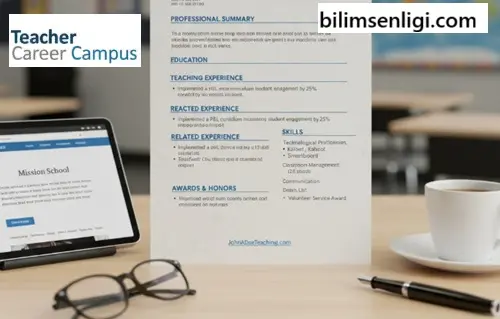
If you enjoy sharing knowledge, working with children, or mentoring young people, you might consider becoming a teacher. Teachers have a profound impact on the future of the world, as they help to cultivate tomorrow’s leaders. If you want to become a teacher, you can first obtain a teaching diploma or comparable education, and then start building a strong teaching resume and applying for teaching positions. In this article, we explain how to make your teaching resume stand out to potential employers, why this is important, and 11 helpful tips.
Why Is It Important to Make Your Teaching Resume Stand Out?
It is important to create a teaching resume that can help you stand out from other candidates because it is one of the first application materials a hiring manager may see. A strong resume can help a potential employer notice you and see you as a candidate they will want to follow up with. This can help you find and be hired for your ideal job at an educational institution that shares your core values and supports its academic staff.
11 Tips to Make Your Teaching Resume Stand Out
Here are 11 tips that will ensure potential employers notice your resume:
1. Organize by Sections Dividing your resume into clear sections can help to draw the reader’s attention to the elements that make you an excellent candidate. Consider adding your name and contact information at the very top of your resume, and then dividing the rest of the page into sections such as Education, Experience, and Skills. You may also choose to add multiple experience sections organized by the type of experience. For example, you can add one section for teaching experience, another for tutoring experience, and a third for volunteer work experience with youth.
Read more: The 10 Most Important Skills to Include in Your Teacher Resume
2. Organize with Subsections In each section, you can use bullet points and sub-bullet points to organize your information. Following the same format for each section can also be helpful to create a consistent and tidy appearance. For example, you can format your experiences by listing the name of the organization and then adding the years you worked in that position in parentheses. Below that, you can add a sub-bullet point that includes a brief description of your duties and accomplishments in that role.
3. Prioritize Readability Hiring managers may only take a quick glance at each resume, so it is crucial to prioritize readability. This can help ensure the reader easily understands your most important points. One strategy to make your resume legible is to select the right font. Calibri, Times New Roman, and Arial are clear and professional font options. Another strategy is to limit the number of items you add to your resume to create a clean and uncluttered document. Consider excluding your oldest or least relevant teaching experiences to draw the reader’s attention to your most recent or most impressive accomplishments.
4. Use a Template Templates can be useful tools for people who want to add style to their resumes and present their information effectively. Finding an existing template can also save you time you might spend adjusting small style elements like margins and font size. You can choose a template close to your ideal format and customize specific elements. This can be a beneficial strategy as it can help to differentiate your resume both from people who do not opt to use templates, as well as those who may have chosen the same resume template.
5. Add a Professional Summary A professional summary is a statement that introduces you and your career goals. This section is sometimes also referred to as the resume objective or professional goal. You can add a summary at the top of your resume. This makes it one of the first things a potential employer may see, so a strong statement can help you make a powerful first impression. To write a purpose statement, ask your friends or colleagues for suggestions of adjectives that describe you, and then combine those suggestions with a brief description of your goals.
You can research the values and mission of the educational institution you are applying to, and customize your statement using similar language. This can help to explain why you are more likely to be a valuable contribution to that institution.
6. Add a Section for Awards and Honors Consider adding an extra section for awards and honors toward the bottom of your resume. In this section, you can include all relevant awards, such as academic honors, the dean’s list, or competition prizes. These can be a useful way to prove your dedication, hard work, and skills to potential employers. The awards section can also be a good opportunity to mention accomplishments and skills you would not normally have the opportunity to include.
For example, if you participate in volunteer work and receive a volunteer award from your university, you can show your commitment to volunteerism by adding that award to your awards section. This leaves more space for more closely related work experiences in your experience section.
7. Emphasize Familiarity with Technology Technology is an important element of many modern classrooms, so listing which teaching tools you are most familiar with and how you use them while teaching can help your resume stand out. If the use of technology in the classroom is important to you, you can consider mentioning it in your summary. You can also list your technology responsibilities in your experience descriptions or list specific technologies under special skills. For example, you can indicate that you are familiar with assignment sharing websites, online study aids, in-class smart board interfaces, or grading technology systems.
8. Customize Your Resume for Every Opportunity For every opportunity you apply to, researching the school or educational institution can help you create a customized resume that aligns with their values and needs. You can visit the school’s website to learn about their mission statements, current faculty members, and core educational philosophies. This can help you understand which elements of your resume may be the most valuable. You can also find specific keywords that the institution uses to describe itself, and add those words to your resume. This can help potential employers see your resume as a strong match for their open positions.
9. Include Keywords Keywords in a teacher’s resume are words or phrases that represent core ideas related to teaching. Adding keywords to your resume can help you express your goals, values, and experiences quickly and effectively. Keywords can also help you have an up-to-date understanding of contemporary teaching values and standards, which some employers may find valuable. Some evaluators use keywords to search among resume applications. A resume that includes multiple keywords the evaluator is looking for may appear at the top of the search results. This means that including keywords that describe the position you are applying to can help potential employers find your resume.
You can use keywords such as collaborative learning, hands-on education, individualized education plan (IEP), and curriculum development to describe your teaching. You can also describe your professional skills with keywords such as public speaking, perseverance, leadership, communication, inclusivity, problem-solving, goal-setting, collaboration, and conflict resolution. Other useful teaching keywords to consider include classroom management, special education, bilingualism, cooperative learning, and executive function (EF).
10. Do a Proofread One of the final steps you should take before submitting your resume to an open position is to carefully proofread for grammatical or spelling errors. You may also find opportunities to improve the readability of your resume. For example, you may find a sentence you can shorten, or an opportunity to simplify the formatting.
It can be beneficial to give yourself a day or two for a proofread after you have finished writing your resume. This allows you to read your resume as if you are reading it for the first time, and can give you more insights into what improvements you need to make. You can also give your resume to a friend or colleague to proofread. In addition to finding small grammatical or spelling errors you may have missed, they can also advise on which resume elements caught their attention and which ones you might benefit from strengthening.
11. Provide a Link for More Information It can be difficult to fit everything about yourself into a one-page resume, so consider adding a link toward the top or bottom of your resume that readers can click to learn more about you and your teaching work. This link can lead to a professional network profile that lists your more detailed experiences. Alternatively, you can create a professional website to highlight your best teaching qualifications. On this website, you can add details about your teaching philosophy and examples of past curricula. You can also include testimonials from past parents or students.