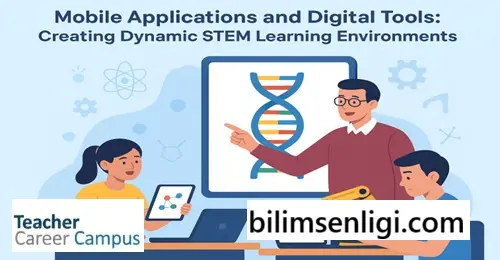
The 21st-century educational vision aims to transform students from passive receivers of information into active problem-solvers and creative producers. While the importance of Science, Technology, Engineering, and Mathematics (STEM) fields is undeniable in this transformation, the way we teach these disciplines must also fundamentally change. It is at this juncture that Mobile Applications and Digital Tools emerge as critical instruments that support teachers’ careers and turn learning environments from static settings into dynamic adventures.
This article examines how teachers can use digital tools to create more effective, personalized, and engaging STEM learning experiences, thereby strengthening their own professional development.
1. The Contribution of Digital Transformation to the Teaching Career
In traditional education, the teacher plays the role of the information source and supervisor, but in a STEM environment equipped with digital tools, the teacher becomes a coach, guide, and architect of learning orchestration. This shift in role directly increases teachers’ professional satisfaction and sense of competence.
A. Time Management and Efficiency
One of the greatest benefits of digital tools is reducing the routine and time-consuming workload on teachers. Thanks to Learning Management Systems (LMS) and mobile applications that provide automatic grading, instant feedback mechanisms, and student progress tracking, teachers can dedicate the time they spend on lesson preparation, assessment, and administrative tasks to focusing on students’ individual needs. This allows teachers to be less fatigued and more motivated.
B. The Power of Personalized Instruction
Mobile applications and adaptive learning platforms allow each student to progress at their own pace and style. At the moment a student has difficulty understanding a mathematical concept, the application can provide them with personalized extra exercises or visual explanations. Through real-time data analysis provided by these digital tools, teachers can instantly see which student needs support and where, and intervene accordingly. This personalization increases students’ success rates, while also strengthening teachers’ sense of being able to touch every student and make a difference.
2. Creating Dynamic STEM Learning Environments
The essence of STEM education lies in hands-on and experiential learning. Digital tools carry this experiential learning beyond the classroom walls.
A. Virtual Laboratories and Simulations
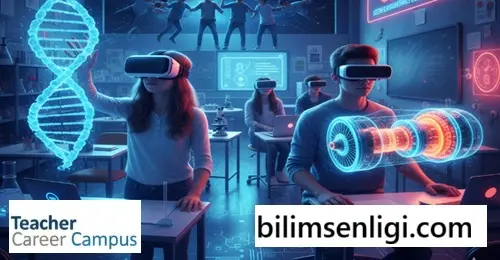
The cost of physical laboratories, time constraints, and safety risks can prevent some experiments from being conducted. However, mobile applications and Virtual Reality (VR) tools eliminate these barriers. Students, with tools like PhET Interactive Simulations, can experience chemical reactions, laws of physics, or electrical circuits in a safe environment, without using expensive chemicals or risking damage to complex machinery. These virtual laboratories deepen understanding by allowing students to visualize abstract concepts in 3D. For teachers, this means less logistical burden and more teaching opportunities.
B. Creating Context with Augmented Reality (AR)
Augmented Reality (AR) applications overlay the course content onto the real world around students, putting learning into context. For example, in a biology class, students, by pointing their phones at their desks, can examine a 3D model of a DNA helix or the human heart on their table. In an engineering project, they can visualize the bridge model they designed on a real landscape. These tools enable students to instantly connect abstract information with concrete reality, maximizing curiosity and interest.
C. Coding and Robotics Platforms
Coding and engineering skills, which are the cornerstone of STEM education, can be easily brought into the classroom with digital tools. Mobile-based coding platforms such as Scratch or Swift Playgrounds allow students to learn algorithmic thinking in a gamified environment. Teachers can use these tools to encourage students to work with robotics kits or virtual robot simulations, thereby practically developing students’ problem-solving and systems thinking skills.
3. Strengthening Teachers’ Digital Competency
Creating these dynamic environments requires teachers to acquire new skills. Supporting the teaching career cannot be considered separate from the integration of digital tools into the classroom.
A. Continuous Professional Development Models
The digital transformation requires teachers to be continuous learning professionals. It is essential that schools provide teachers with training programs that are practice-based and collaborative, which not only introduce the tools but also teach the pedagogical integration of these tools. Digital communities (such as PLCs – Professional Learning Communities), where teachers share best practices with each other, are the key to making this development sustainable.
B. Freedom to Experiment and Take Risks
For teachers to incorporate new technologies into their lessons, they need a culture that allows them to experiment without fear of failure. School administration should encourage teachers to try new mobile applications or VR/AR tools and support them, regardless of the outcomes of these attempts. This freedom to take risks accelerates the adoption of innovative approaches by teachers.
Conclusion
Mobile applications and digital tools are powerful catalysts that redefine STEM education. For teachers, these tools offer opportunities that go beyond merely presenting didactic material and transform the teaching profession. Teachers who use these technologies effectively not only increase student success by making their lessons more engaging, more personalized, and more efficient, but they also achieve a deep sense of satisfaction and competence in their own professional careers. Creating dynamic STEM learning environments is the key to nurturing the problem-solvers of the future and rebuilding 21st-century teaching.