Artificial intelligence and digital learning platforms have become the cornerstones of student-centered education. These tools allow students to learn at their own pace, concretize abstract concepts through simulations, and enable individuals with special needs to overcome barriers. Here is a detailed analysis of tools available for use in education, categorized by discipline:
Personalized and Interactive Solutions in Mathematics Education
Mathematics is generally viewed as one of the most challenging subjects for students. However, AI-supported tools are transforming mathematics from mere problem-solving into an explorable universe.
Problem Solvers and Step-by-Step Guidance It is critical for students to be able to receive instant support at points where they get stuck. Tools like Photomath, Microsoft Math Solver, Cymath, and Mathway solve equations scanned by camera or written by hand in seconds. However, the real pedagogical value of these tools lies not just in providing the result, but in explaining the solution steps in detail. Symbolab and Algebrator provide step-by-step guidance to students, especially in algebra and calculus topics, with the feel of a “private tutor.” Desmos and GeoGebra ensure the grasping of the logic behind functions and geometric shapes by visualizing graphics.
Gamification and Adaptive Learning Gamification is one of the most effective methods to make mathematics beloved. Prodigy is a math curriculum hidden inside a role-playing game (RPG); students must solve math questions to fight monsters. DragonBox offers puzzles that secretly teach the logic of algebra. While MathFacts Pro and Buzzmath are used to reinforce basic operational skills, Polyup turns numerical operations into modifiable objects.
More academic platforms focused on curriculum tracking such as DreamBox Learning, Zearn Math, Mathspace, Mathletics, and Mathseeds use AI algorithms to detect the student’s level. If a student struggles with a topic, the system automatically returns to simpler examples or offers a different teaching style (Adaptive Learning). IXL Learning and Mathigon offer more than just math, providing a wide pool of questions and exploration-based content.
Science: Virtual Laboratories and Simulations
Experimentation is essential in science education, but not every school may have advanced laboratory facilities. Digital tools close this gap, bringing everything from subatomic particles to space science into the classroom.
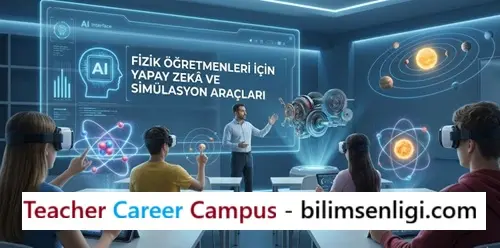
Physics: Making Force and Motion Visible In physics lessons, tools like Algodoo and Thinkrolls are excellent for concretizing abstract formulas; students can create their own simulations and play with forces like gravity and friction. PhET Interactive Simulations visualizes every topic from circuits to wavelengths with its world-renowned simulations. PhysX, a realistic physics engine developed by NVIDIA, offers more advanced simulations.
On the measurement and calculation side, Physics Toolbox Suite and Science Journal allow students to collect real data using smartphone sensors (accelerometer, magnetometer, etc.). Isaac Physics and Khan Academy Physics are platforms that reinforce theoretical knowledge. Physbot and PhysicsCalc serve as helpful assistants in calculation and problem-solving processes.
Chemistry: Digital Twins of the Molecular World Chemistry education has one of the widest ranges of tools on this list.
- Visualization and Drawing: ChemDraw, ChemDoodle, and Chematica provide professional-level chemical structure drawing and analysis. Avogadro is used to model and rotate molecules in 3D, while Toca Lab: Elements and ChemCollective teach elements and reactions by gamifying them for younger age groups or high school entry levels.
- Data Analysis and Prediction (Advanced Level): ChemProp, ChemML, and Chemical Reaction Prediction Models integrate machine learning into chemistry to predict reaction results and substance properties. ChemDes, RDKit, and Chemoinformatics Tools are used to process large chemical data sets. Gaussian and CHARMM open the door to university-level research with quantum chemistry and molecular dynamics calculations.
- Safety and Exams: Safety Data Sheet (SDS) Analysis Tools offer risk analyses of chemicals for laboratory safety. Chem101, Chemistry Quiz, Chemistry MCQ, and Chemistry Questions provide wide question pools to measure students’ knowledge. Tox21 is a database tool that analyzes the toxicological effects of chemicals. Synthia is used in planning synthetic biology and chemical synthesis routes.
Biology and Genetics: Deciphering DNA’s Code Powerful software stands out in biology education, especially in the fields of genetics and molecular biology.
- Genetic Analysis: BLAST, NCBI GenBank, NCBI Tools, and Geneious are professional tools also used by scientists to analyze DNA and protein sequences and scan databases. BioEdit and CLC Genomics Workbench are used in sequence alignment and genomic analyses. EMBOSS is an open-source biological software package.
- Molecular Structure: PyMOL is the industry standard for visualizing the 3D structures of proteins and macromolecules.
General Science and STEM (Interdisciplinary) Mystery Science, Science Experiments, and DIY Nano / DIY Sun Science offer teachers ready-made lesson plans and experiments that can be done with simple materials. Little Alchemy is a fun puzzle game that allows discovering new substances by combining elements. The Magic School Bus: Oceans offers story-based learning to explore ocean life. The Robot Factory by Tinybop allows for virtual robot design to develop engineering skills. STEM Islands combines science and math on an adventure-filled island.
Language Acquisition and Reading Skills
In language learning and reading habit acquisition processes, AI makes a difference by offering personalized content.
Reading Platforms and Digital Libraries Epic!, Raz-Kids, Reading IQ, and Reading Eggs provide students access to thousands of books suitable for their reading levels. These platforms track the student’s reading speed and comprehension. Homer offers a personalized reading plan, while Squiggle Park develops reading skills through games. Starfall and ABCmouse offer interactive content rich in audio and visuals for preparation for reading and writing, especially in the preschool and primary school periods.
Language Learning and Listening Duolingo is the world’s most popular language learning application with its gamified structure. Audible and BookPlayer develop listening skills through audiobooks and also provide accessibility for visually impaired individuals. Quizlet offers digital flashcards for vocabulary learning and ensures words stay in memory using the spaced repetition method.
Social Studies: Living History and Geography
Social studies is not just about memorizing maps or knowing dates, but making sense of the world and the past.
Geography and Exploration Google Earth takes students out of the classroom on a 3D journey to any point in the world. GeoGuessr is a game that develops geographical observation skills where students are dropped at a random location and try to guess where they are. National Geographic Kids introduces nature and cultures, while Time Zone X is a game that teaches time zones and countries.
History and Citizenship TimeMaps and Historia strengthen cause-and-effect relationships by showing historical events on interactive maps and timelines. Mission US brings American history to life in a role-playing game (RPG) format. iCivics prepares students to be conscious individuals by teaching citizenship, law, and government systems through games. Historypin combines historical photos and stories on a map.
Special Education and Accessibility: Technology Removing Barriers
One of the most meaningful uses of technology is ensuring the participation of individuals with special needs in life.
Solutions for Visual Impairment Be My Eyes and Aira allow visually impaired individuals to connect to sighted volunteers or assistants to get information about their surroundings. Color Inspector, Color Identifier, and Color Blind Pal define colors audibly or organize them for the color blind. Braigo is used in teaching the Braille alphabet.
Hearing Impairment and Sign Language Tools like ASL Dictionary, ASL Coach, and ASL Translate are used to learn and translate American Sign Language (ASL) (Turkish Sign Language alternatives should also be considered in the context of Turkey). These tools break down communication barriers.
Cognitive Development and Support BrainHQ, CogniFit Brain Fitness, and Elevate offer neurological exercises that develop cognitive skills such as memory, attention, and processing speed. Tools like Learning Ally (referenced indirectly in the list) provide audiobook support for individuals with dyslexia.
General Classroom Management, Coding, and Productivity
General tools that IT teachers and classroom teachers can use jointly increase in-class interaction.
In-Class Interaction and Assessment Kahoot! is the most popular assessment tool that turns lessons into a competition. Nearpod ensures student participation in the lesson with interactive presentations. ClassDojo is a gamified platform for classroom management and behavior tracking. Seesaw is a space where students record their work as a digital portfolio. Brainly is a peer learning platform where students ask and answer each other’s questions. BrainPOP summarizes topics with educational videos. iTooch offers tablet-based interactive tests.
Coding and AI Generation MIT App Inventor allows students to make their own Android applications with block-based coding. Google Teachable Machine is a great starter tool for training AI models (image, sound classification) without writing code. IBM Watson is used for more advanced AI projects. Wolfram Alpha answers complex questions as a computational knowledge engine.
Conclusion
These hundreds of listed tools show that the future of education is hybrid, personalized, and data-driven. A high school student drawing a molecule with ChemDraw, a primary school student learning to read with ABCmouse, a visually impaired individual seeing the world with Be My Eyes, or a geography class touring the Amazon forests with Google Earth… All are proofs of the limitless possibilities technology offers to education.
Teachers recognizing these tools will not only enrich their lessons but also enable them to raise their students as individuals equipped with 21st-century digital competencies. It should not be forgotten that even the best technology only gains meaning in the hands of a visionary teacher who uses it for a pedagogical purpose.